Winter Allergies: Why You Sneeze More When the Heating Goes On
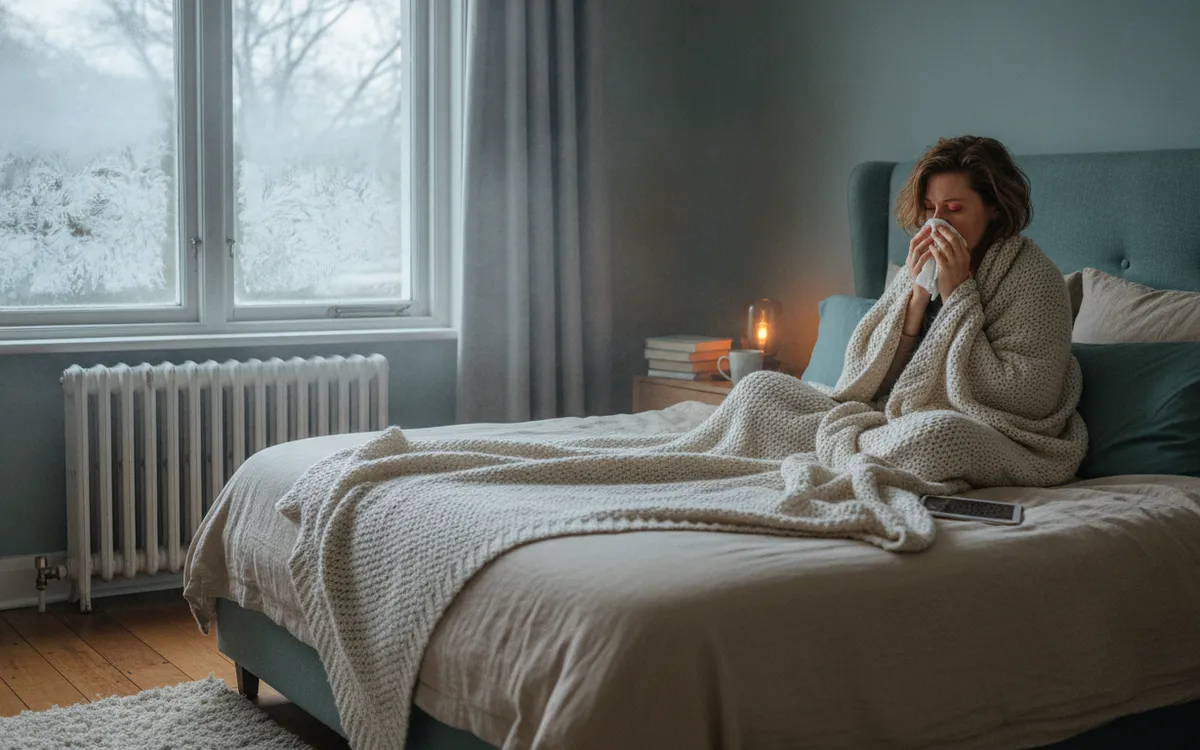
Winter allergies are allergic rhinitis triggered by things inside the home: house dust mites, pet dander, mould and, in some homes, cockroach droppings. They flare when the heating goes on and the windows stay shut. You spend more hours breathing the same indoor air, and warm bedding is the ideal home for dust mites.
The giveaway is the pattern. A cold builds, peaks and fades within a week or two. Winter allergies grind on for weeks, are worst in the bedroom at night and first thing in the morning, and ease when you leave the house.
This guide covers what causes them, how to tell them from the colds going round, what actually reduces the triggers, and when to see a doctor.
What causes allergies in winter?
Pollen is gone, so "seasonal allergies" should be over. For many people the opposite happens. The NHS allergic rhinitis guide lists house dust mites, animal dander and mould among the common triggers, and all three are indoor, year-round allergens. Winter concentrates your exposure to them.
House dust mites
An allergy to house dust mites is the most common cause of indoor allergies in winter. Dust mites are microscopic creatures that feed on shed skin and live in mattresses, pillows, duvets, carpets and soft furniture. The allergen is in their droppings and body fragments. The Asthma and Allergy Foundation of America notes they thrive at temperatures around 70°F (21°C) and above, with humidity above 50%.
Central heating dries the room air, which should work against mites. The bed is different. Your body warms the bed and keeps the bedding damp all night. The mattress and pillow stay inside the mites' comfort zone even when the room air is dry. That is one reason dust mite symptoms peak in bed and on waking. Having your face on the main reservoir for eight hours is the other.
Pet dander
Dander is tiny flakes of skin, plus proteins in saliva and urine that dry onto fur. In winter pets spend more time indoors and often on the bed or sofa. Closed windows mean the dander stays in the air and on fabrics instead of being ventilated out.
Mould
Condensation on cold windows and walls, steamy bathrooms with the window shut, and drying washing indoors all raise mould levels in winter. Mould spores trigger the same sneezing and congestion as pollen.
Other winter triggers
Wood smoke from a stove or fireplace, scented candles and dry air irritate the nose without being true allergens. They can make an existing allergy feel worse. They are not allergens, but wood smoke is a real asthma trigger, so treat it seriously if you wheeze. If your symptoms track with the fire being lit rather than with bedtime, irritation is the more likely story.
Is it winter allergies or a cold?
This is the question that matters most in October and November, because both are common and they overlap.
| Clue | Winter allergies | Cold |
|---|---|---|
| How it started | Crept in when the heating went on, or after a pet or new bedding arrived | Over a day or two, often with a sore throat first |
| Time of day | Worst in bed, on waking, and in the evening at home | Bad all day, often worse at night |
| Away from home | Often eases within a day or two away | No change |
| Pattern across the winter | Same every evening at home, week after week | One episode, then it clears |
| Duration | Weeks to all winter | Usually better within one to two weeks |
The "away from home" row is the one to test. If a weekend away clears your nose and it blocks again the night you get back, the house is the problem. For the full symptom-by-symptom table, including itching, mucus and fever, see our guide to telling allergies from a cold.
You can have both at once. If a cold seems to last six weeks, there are two usual explanations. The cold cleared on top of an allergy that did not, or the cold has become sinusitis. Our guide to allergic rhinitis versus sinusitis covers the second case.
Am I allergic to cold weather?
A nose that runs or blocks the moment you step into cold air is common, but it is usually not an allergy. The NHS describes non-allergic rhinitis, where the nasal lining reacts to changes in temperature or humidity rather than to an allergen. Cold, dry air triggers a watery drip that stops once you warm up. Our article on why your nose runs more as you age explains the same mechanism in older adults, who are most troubled by it.
A true allergy to cold exists but is rare and affects the skin, not the nose. Cold urticaria causes hives or swelling on skin exposed to cold. If you get raised, itchy weals after cold exposure, see a doctor, and avoid swimming in cold water until you have. A whole-body reaction to cold is rare but can be dangerous. Call emergency services for faintness, swelling of the face or throat, or breathing difficulty after cold exposure.
What helps: reduce the trigger first
Medicines treat the reaction. Reducing the allergen treats the cause, and in winter most of the allergen is in one room. Start with the bedroom.
For dust mites
- Fit zip-up allergen-barrier covers on the mattress and pillows, and a washable cover on the duvet. The AAFA includes these in its core dust mite checklist.
- Wash sheets, pillowcases and blankets weekly in hot water. The AAFA advises at least 130°F (about 54°C).
- Keep bedroom humidity between 30% and 50%. A cheap hygrometer tells you where you are. Do not run a humidifier in a dust mite allergy sufferer's bedroom unless the air is measurably dry.
- Vacuum with a HEPA-filter vacuum weekly, and do it when the allergic person is out of the room.
- Keep soft toys off the bed where you can. Wash the ones that stay in hot water weekly. Freezing kills mites but does not remove the allergen, so wash after freezing.
For pet dander
- Keep pets out of the bedroom, and keep the bedroom door shut when you are out. The AAFA indoor allergen guidance is blunt: people with a pet allergy should not keep a pet, and there is no such thing as a hypoallergenic pet. If the pet stays, the bedroom is the line to hold.
- Wash pet bedding and the pet's favourite blanket often.
- Wipe pets down after walks in winter, when fur carries more dirt and damp indoors.
For mould
- Open the bathroom window or run the extractor during and after showers.
- Wipe condensation off windows in the morning. Fix leaks promptly.
- Dry washing outdoors or in a room with the door closed and a window open, not on radiators in the living room.
- Clean visible mould straight away and use a dehumidifier in damp rooms.
Our guide to reducing indoor allergens goes through the rest of the house room by room.
What helps: treating the symptoms
A pharmacist can recommend treatment without a GP visit. The NHS lists the main options for allergic rhinitis:
- Antihistamines ease sneezing, itching and a runny nose. A pharmacist can suggest a non-drowsy type for daytime use.
- Steroid nasal sprays reduce the swelling that causes blockage. They work best used every day and can take up to two weeks to reach full effect. If your symptoms arrive every autumn, ask a pharmacist about starting before they do.
- Saline sprays and rinses wash allergen off the nasal lining. Our nasal rinse guide covers safe water and technique.
- Decongestant sprays unblock the nose quickly, but the NHS advises no more than five days of use, because longer use makes the blockage worse. They are not for young children. Ask a pharmacist before giving any decongestant to a child.
If pharmacy treatments do not control symptoms, a GP can prescribe stronger options or refer you for allergy testing. Testing is worth doing when the result would change what you do. That might be whether to spend on mattress covers, or whether the cat can stay in the bedroom. It also shows whether you are a candidate for immunotherapy, which a specialist can discuss.
Children and winter allergies
Children get many more colds than adults, so a child with a permanently runny nose through winter is easy to dismiss. Watch for itchy eyes, a crease across the nose from rubbing it, mouth breathing at night and symptoms that never fully clear between colds. Our guide to allergic rhinitis in children covers assessment and treatment choices for each age.
When to see a doctor
See a GP if symptoms disturb sleep or daily life despite pharmacy treatment, if the cause is unclear, or if you have asthma and it is getting worse. Persistent symptoms on one side of the nose only, bleeding, or loss of smell need a check for other causes.
If you have asthma, dust mites, mould and wood smoke can set off wheeze as well as sneezing. If you need your reliever inhaler more than usual, or wake at night wheezing, see a GP or asthma nurse. If you have a weakened immune system, do not clean mould yourself and ask a doctor about any persistent nasal symptoms. For babies under one, do not use any allergy medicine without advice from a pharmacist or doctor.
Call your local emergency number for severe breathing difficulty, or swelling of the lips, tongue or throat. These are not symptoms of ordinary allergic rhinitis.
Frequently asked questions
Why are my allergies worse in winter?
You spend more time indoors with the windows shut, so dust mite, pet and mould allergens build up in the air and in fabrics. Warm bedding is also the ideal environment for dust mites, which is why symptoms peak at night and on waking.
What are winter allergy symptoms?
Winter allergy symptoms are sneezing, an itchy or runny nose, a blocked nose, itchy watery eyes and sometimes an itchy throat, lasting for weeks rather than days. They are worst at home and ease when you are out.
Can you be allergic to cold weather?
A runny nose in cold air is usually non-allergic rhinitis, a reaction of the nasal lining to cold, dry air. A true cold allergy, cold urticaria, is rare and causes hives on the skin.
Do winter allergies go away in spring?
Indoor allergens are present all year. Symptoms often ease in spring because windows open and ventilation improves, then return the next autumn. People with pollen allergies may find one season runs into the next.
Does a humidifier help winter allergies?
Only if the air is genuinely dry. Humidity above 50% feeds dust mites and mould, so measure first. For a dry, irritated nose with no allergy, a humidifier can help.
This article provides general information. A pharmacist or doctor should guide treatment, particularly for children, in pregnancy, or if you take other medicines.