CPAP Dry Nose: Why It Happens and 8 Solutions That Actually Work
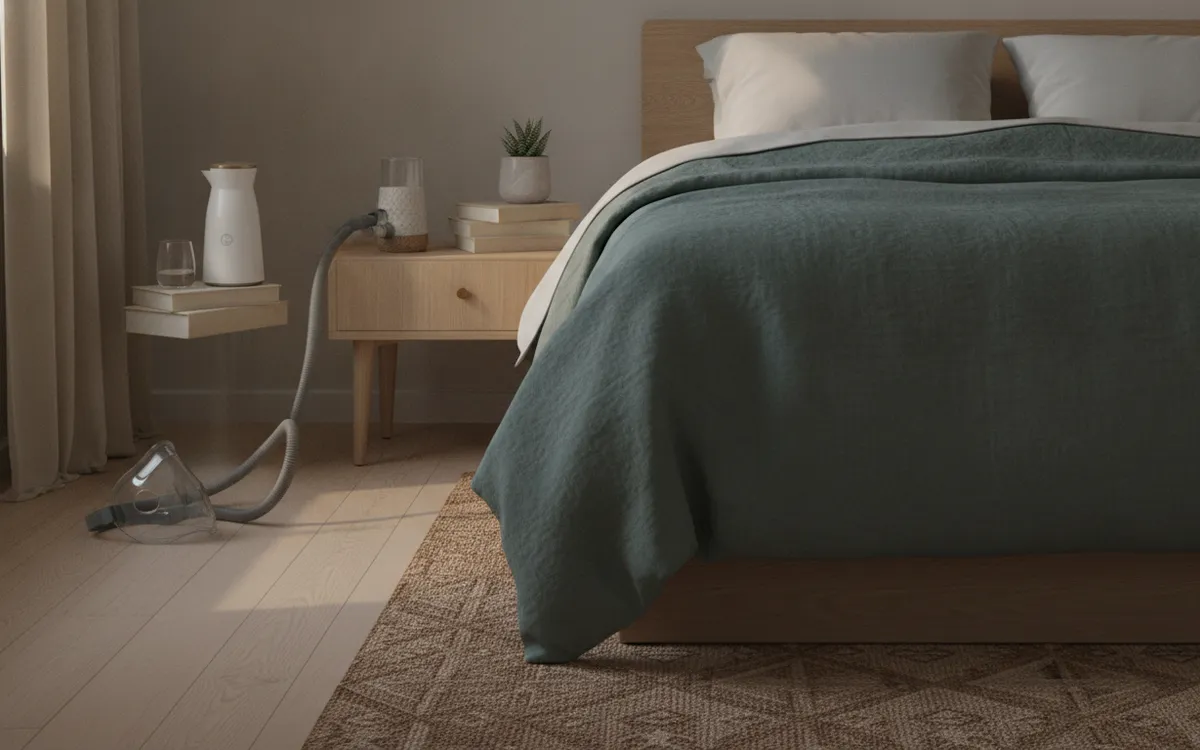
CPAP dry nose happens because pressurised airflow overwhelms your nose's natural humidification. The fix, in order of impact: turn on (or turn up) heated humidification, add heated tubing to stop overnight rain-out compensation, treat the nose itself with saline before bed, and check your mask for leaks that force extra airflow. Most CPAP users can eliminate nasal dryness within a week by combining two or three of these.
Dry nose matters beyond comfort. A dried-out nasal lining is more prone to congestion, nosebleeds and infections, and it is one of the most common reasons people abandon CPAP therapy in the first months. If your main symptom is a blocked rather than dry nose, our guide to CPAP nasal congestion is the better starting point.
Why CPAP dries your nose out
Your nose normally warms and humidifies every breath using moisture from its own lining. CPAP multiplies the volume of air moving through your nose each night, and the lining simply cannot keep up. The result: dryness, crusting, irritation, and sometimes a paradoxical runny nose as the tissue reacts. Mouth leak makes it worse, because air escaping through an open mouth creates a one-way moisture drain.
The 8 solutions, ranked
1. Use heated humidification (and set it higher than you think)
Nearly all modern machines include a heated humidifier chamber. If yours is off or on a low setting, this is the fix. Start at the middle setting and increase by one level every two nights until dryness resolves. Use distilled water and wash the chamber weekly.
2. Add heated tubing
Standard tubing cools the humidified air on its way to your mask, causing condensation (rain-out). Machines respond by limiting humidity. Heated tubing keeps the air warm along the whole path, letting you run higher humidity without waking up to a wet mask. Most machines from the major manufacturers support an optional heated hose.
3. Saline spray or gel before bed
A saline spray directly hydrates the lining before airflow starts. For stubborn dryness, a water-based nasal gel or spray applied at bedtime lasts longer than plain saline. Avoid petroleum-based products such as petroleum jelly inside the nose, especially with oxygen or heated air.
4. Fix mask leaks
A leaking mask forces the machine to push more air to hold pressure, and that extra airflow dries you out. Check your machine's leak rate in its morning report or app. Refit the mask seated and lying down, and replace cushions on schedule; a worn cushion is the most common leak source.
5. Deal with mouth leak
If you use a nasal mask or pillows and wake with a dry mouth as well as a dry nose, air is escaping through your mouth. Options: a chin strap, switching to a full-face mask, or, for suitable users, mouth taping. Read our mouth taping guide first, and never tape with untreated nasal blockage.
6. Humidify the bedroom itself
CPAP draws in room air. In winter, centrally heated bedrooms often sit well below comfortable humidity, so the machine starts with a deficit. A room humidifier eases the load; our guide to the best humidifier for a dry nose covers what to look for.
7. Rinse and moisturise the nose in the morning
A morning saline rinse clears crusting and keeps the lining healthy between sessions. If you get recurrent nosebleeds from dryness, mention it to your sleep clinic; persistent bleeding needs review rather than more home remedies.
8. Review your pressure settings with your clinic
Higher pressures move more air. If dryness started after a pressure increase, or your auto-CPAP is spending the night at its upper limit, ask your sleep service to review the data. Never change prescribed pressure yourself.
Quick troubleshooting table
| Symptom | Most likely cause | Start with |
|---|---|---|
| Dry nose only | Humidifier off or too low | Solutions 1 and 3 |
| Dry nose + wet mask in the morning | Rain-out limiting humidity | Solution 2 |
| Dry nose + dry mouth | Mouth leak | Solution 5 |
| Dry nose + high leak rate in app | Mask fit | Solution 4 |
| Dryness every winter | Dry bedroom air | Solution 6 |
When to involve your sleep clinic
- Recurrent nosebleeds or painful cracking inside the nose
- Dryness that persists after two weeks of maximum comfortable humidification
- New facial pain, thick coloured discharge, or signs of sinus infection
- You are skipping CPAP nights because of nasal symptoms; adherence problems are exactly what clinics want to hear about early
Frequently asked questions
What humidifier setting should I use on my CPAP?
There is no universal number; the right setting is the lowest one that eliminates dryness without causing condensation in your mask. Start mid-range and adjust one step at a time. With heated tubing you can usually run higher settings comfortably.
Why does my nose burn when using CPAP?
Burning usually means the lining is already dried and irritated. Add humidification, use saline gel at night, and give the nose a few days to recover. If burning continues with good humidity, ask your clinic to check the mask and pressure.
Can I use tap water in my CPAP humidifier?
Use distilled water. Tap water leaves mineral scale in the chamber and, in rare cases, can carry microorganisms you do not want aerosolised. If you must use tap water occasionally, boil and cool it first and clean the chamber afterwards.
Will a full-face mask stop dry nose?
It stops the mouth-leak component, which is often the biggest driver. Airflow through the nose continues, so keep humidification on. Some users trade dry nose for other fit challenges, so treat a mask switch as one option rather than the automatic answer.