Mouth Taping for Sleep: Complete Guide to Benefits, Risks & How to Do It Safely
Mouth taping has exploded across social media, with millions of people claiming it transformed their sleep quality. But is this viral trend actually safe? And does it really work?
In this comprehensive guide, we'll examine the science behind mouth taping, explore its potential benefits and risks, and provide clear guidance on whether—and how—you might try it safely.
What Is Mouth Taping?
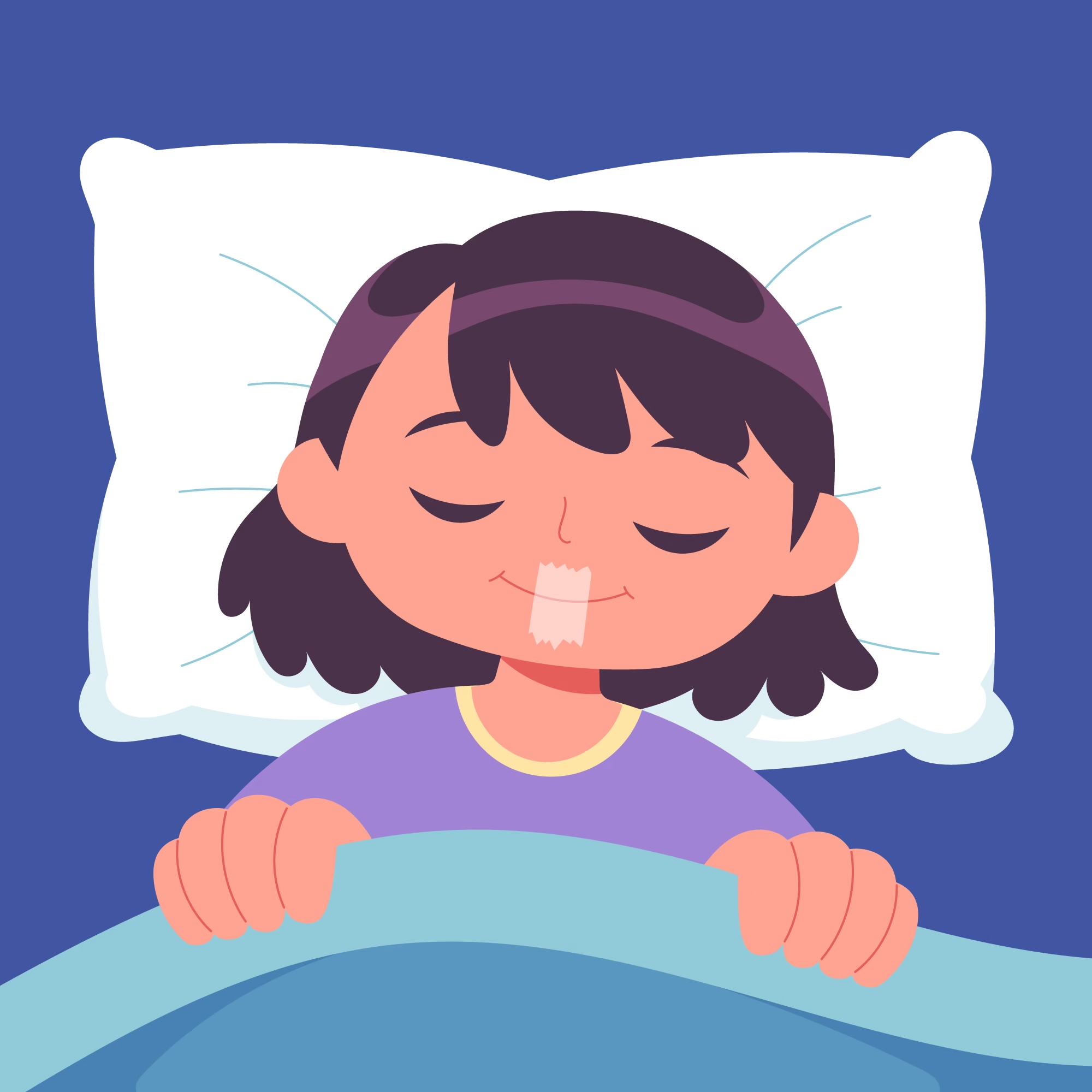
Mouth taping is exactly what it sounds like: placing a small piece of tape over your lips before bed to keep your mouth closed during sleep. The goal is to encourage breathing through your nose rather than your mouth throughout the night.
The Rise of a Viral Trend
While mouth taping has been discussed in breathing and wellness circles for years, it gained mainstream attention through TikTok and Instagram in the early 2020s. Influencers began promoting it as a solution for everything from reducing snoring to achieving a more defined jawline.
The trend taps into growing awareness about the importance of nasal breathing. Unlike mouth breathing, breathing through your nose:
- Filters and humidifies incoming air
- Produces nitric oxide, which helps oxygen absorption
- Engages the diaphragm for deeper breathing
- May improve sleep quality by promoting slower, more rhythmic breathing
Potential Benefits of Mouth Taping
Does Mouth Taping Actually Stop Snoring?
Snoring is the most common reason people try mouth taping — and it's the area with the strongest (though still limited) evidence.
Mouth breathing is one of the primary drivers of snoring. When your mouth falls open during sleep, your jaw drops back, your tongue slides toward your throat, and the airway narrows. The soft tissue around this narrowed space vibrates as air passes through, and that vibration is the sound of snoring.
Mouth taping forces nasal breathing by keeping your lips sealed, which keeps your jaw forward and your tongue in a more natural position. For people whose snoring is caused by mouth breathing, this can make a measurable difference.
What the Research Shows
A 2022 study published in Healthcare (PMC) tested mouth taping on patients with mild obstructive sleep apnea who were confirmed mouth breathers. The results were notable: the apnea-hypopnea index (AHI) — a measure of snoring and breathing disruption severity — dropped by roughly half. Snoring intensity also decreased significantly.
However, a 2024 scoping review published in the American Journal of Otolaryngology examined all available mouth taping studies and found that while some showed benefits, the overall quality of evidence was poor. Most studies were small (under 30 participants), short-term, and lacked control groups. The review concluded that mouth taping cannot yet be recommended as a clinical intervention for the general population.
In plain terms: mouth taping appears to help mild snorers who breathe through their mouth, but the science isn't strong enough to call it a proven treatment.
What Kind of Snoring Mouth Taping Helps
Not all snoring is the same, and mouth taping only addresses one type:
Mouth-breathing snoring (mouth taping can help): If you wake up with a dry mouth, your partner notices your mouth is open while you sleep, or you find yourself breathing through your mouth during the day — your snoring is likely mouth-related. This is where mouth taping has the best chance of working.
Nasal-congestion snoring (mouth taping alone won't help): If your nose is blocked from allergies, a cold, or chronic congestion, taping your mouth shut forces you to breathe through an obstructed airway. This can make things worse, not better. You need to address the congestion first — with nasal strips, a saline rinse, or a nasal corticosteroid spray — before mouth taping is safe or useful.
Throat-based snoring (mouth taping won't help): If your snoring is caused by excess tissue in the throat, an enlarged uvula, or tongue-base collapse, mouth taping won't address the source. These types of snoring need medical evaluation. Our guide on why people snore loudly covers all nine common causes and can help you identify yours.
Sleep apnea-related snoring (mouth taping is not a treatment): If your snoring involves gasping, choking, or breathing pauses, you may have obstructive sleep apnea. Mouth taping does not treat sleep apnea and could be dangerous if it prevents you from breathing through your mouth when your nasal airway is compromised.
Realistic Results: What to Expect
If you're a mouth-breathing snorer with clear nasal passages, here's a realistic timeline:
Nights 1–3: Adjustment period. You may feel anxious, pull the tape off in your sleep, or sleep worse than usual. This is normal. Some people use a small piece of tape vertically over just the centre of the lips to ease in.
Week 1–2: If mouth taping is going to help your snoring, you should notice improvement by now. Ask your bed partner to listen, or use a snoring tracker app like SnoreLab to measure the difference objectively.
After 2 weeks with no improvement: If your snoring hasn't changed, it's not caused by mouth breathing. Stop taping and look into other solutions — nasal strips for congestion-based snoring, or a doctor's evaluation for throat-based snoring.
Improved Nasal Breathing Habits
Some sleep specialists suggest that mouth taping may help "retrain" habitual mouth breathers to use their nose. When your mouth is taped shut, you have no choice but to breathe nasally, which may strengthen this pattern over time.
Better Oral Health
Mouth breathing during sleep contributes to dry mouth, increased risk of cavities and gum disease, morning bad breath, and cracked or chapped lips. By keeping the mouth closed, taping may help maintain oral moisture and reduce these issues.
Mouth Taping vs Nasal Strips: Which Is Better for Snoring?
This is one of the most common questions we get, and the answer depends entirely on why you snore.
| Mouth Tape | Nasal Strips | Both Together | |
|---|---|---|---|
| How it works | Keeps mouth closed, forces nasal breathing | Physically widens nostrils, improves nasal airflow | Clears the nose AND keeps the mouth shut |
| Best for | Mouth breathers with clear nasal passages | Congestion, allergies, mild deviated septum | Mouth breathers who also have some congestion |
| Snoring type | Mouth-open snoring | Nasal snoring | Combined mouth and nasal snoring |
| Evidence strength | Limited but promising for mild cases | Mixed but more studied | No formal studies, but logical combination |
| Cost per night | $0.30–$1.00 | $0.25–$1.20 | $0.55–$2.20 |
| Safety concerns | Risk if nasal passages blocked | Minimal — skin irritation only | Lower risk (strips ensure nasal airflow) |
When to Use Mouth Tape
Choose mouth taping if your main problem is that your mouth falls open during sleep. Signs include: waking with a dry mouth, drool on your pillow, sore throat in the morning, or your partner seeing your mouth open while you sleep. Your nose should be relatively clear — you can breathe through it comfortably during the day without effort.
When to Use Nasal Strips
Choose nasal strips if your snoring gets worse when you're congested, during allergy season, or when you have a cold. If you can feel airflow resistance when you breathe in through your nose, strips address that directly by widening the nasal valve.
When to Use Both Together
The combination of nasal strips and mouth tape is arguably the most effective non-medical approach to snoring — and it's what we recommend for most people. The nasal strip ensures your nose is fully open, and the mouth tape prevents the fallback to mouth breathing. This eliminates the biggest safety concern with mouth taping alone (blocked nasal airway), because the strip is actively keeping your nose open.
If you're going to try the combination approach: apply the nasal strip first, confirm you can breathe easily through your nose, then apply the mouth tape.
Risks and Safety Concerns
Who Should NOT Try Mouth Taping
Do not attempt mouth taping if you have:
- Moderate to severe sleep apnea: Mouth taping could worsen oxygen levels and increase health risks
- Nasal congestion or obstruction: If you can't breathe easily through your nose, taping your mouth could be dangerous
- Chronic sinusitis: Blocked nasal passages make nasal breathing difficult or impossible. If you deal with ongoing sinus pressure, address that first before considering mouth taping
- Deviated septum: Structural issues may prevent adequate nasal airflow
- Allergies: Seasonal allergies can cause nasal swelling that restricts breathing
- Any breathing disorder: Asthma, COPD, or other respiratory conditions
- Anxiety disorders: The sensation of being unable to open your mouth may trigger panic
What Medical Experts Say
The American Academy of Sleep Medicine does not endorse mouth taping as a treatment for sleep disorders. The Cleveland Clinic similarly advises caution, stating that "for individuals already struggling with conditions like nasal obstruction or chronic allergies, mouth taping introduces an unacceptable level of risk."
How to Try Mouth Taping Safely
Step 1: Test Your Nasal Breathing
Before taping your mouth at night, spend an entire day breathing exclusively through your nose. If you struggle to maintain nasal breathing during waking hours, mouth taping at night is not appropriate for you.
Step 2: Choose the Right Tape
Recommended tape types:
- Purpose-made mouth tape: Products specifically designed for sleep use gentle adhesives
- Micropore surgical tape: Gentle, hypoallergenic, and easily removable
- Kinesiology tape: Designed for skin contact and less irritating than standard tape
Never use: Duct tape, packing tape, or any tape that creates a complete seal.
Step 3: Start Gradually
Don't tape your mouth for a full night's sleep right away. Start with 15-30 minutes while relaxing before bed, then gradually increase.
Best Mouth Tapes for Snoring
Not all mouth tapes are created equal. Here are four options that work well specifically for snoring reduction, ranked by overall value.
SomniFix — Best Overall
SomniFix strips are purpose-built for sleep. They have a transparent, low-profile design that covers just the lips (not the whole mouth area), with a small mesh breathing vent in the centre that allows limited mouth breathing if your nose becomes blocked during the night. This vent is the key safety feature — it means you're never fully sealed shut.
- Adhesive: Hypoallergenic gel adhesive, easy removal
- Breathing vent: Yes (central mesh)
- Price: ~$0.75/strip
- Best for: First-timers and anyone nervous about mouth taping. The breathing vent provides a safety net.
Hostage Tape — Strongest Hold
Hostage Tape uses a larger strip that covers more of the mouth area, with a stronger adhesive designed to stay put all night — even for restless sleepers. The trade-off is that removal requires more care in the morning, and people with facial hair may find it uncomfortable to pull off.
- Adhesive: Strong, medical-grade
- Breathing vent: No
- Price: ~$0.50/strip
- Best for: People who've tried lighter tapes and found they peel off during the night. Not ideal for first-timers.
Dream Mouth Tape — Best Budget
Dream offers a straightforward, no-frills mouth tape at an affordable price point. The adhesive is moderate — strong enough for most sleepers, gentle enough for sensitive skin. Available in Cloud (ivory) and Sky (light blue).
- Adhesive: Moderate, skin-friendly
- Breathing vent: No
- Price: ~$0.50–$1.00/strip (cheaper in bulk)
- Best for: Nightly users who want to keep costs down.
Dryft Sleep — Best With Breathing Vent
Dryft uses a lip-shaped design with a strategically placed centre air hole, similar to SomniFix but with a different adhesive approach. The medical-grade, hypoallergenic adhesive peels off cleanly with a quick-release backing.
- Adhesive: Medical-grade, hypoallergenic, quick-peel
- Breathing vent: Yes (centre air hole)
- Price: ~$0.60/strip
- Best for: People who want a vent but find SomniFix too pricey, or those with sensitive skin.
Better Alternatives to Mouth Taping
If mouth taping isn't right for you — or you want to combine it with other approaches — nasal strips are the most natural complement. Our guide to the best nasal strips for snoring reviews five options and helps you pick the right one for your situation. For congestion-based snoring, a neti pot saline rinse before bed can also make a significant difference.
- Nasal strips: External strips mechanically open the nasal passages
- Internal nasal dilators: Small devices inserted into the nostrils to hold them open
- Address underlying congestion: Herbal teas for congestion, saline nasal irrigation, nasal corticosteroid sprays, or allergy medications can all help open your airways
- Nasal irrigation devices: A quality neti pot can flush allergens and mucus before bed, making nasal breathing easier
- Positional therapy: Sleeping on your side rather than your back
- Professional sleep evaluation: A sleep study provides definitive answers
Frequently Asked Questions
Is mouth taping safe for sleep apnea?
No. Mouth taping is only potentially appropriate for very mild cases and should never replace medical treatment.
Can I use regular tape?
We don't recommend it. Only use tapes specifically designed for skin contact.
Should children try mouth taping?
No. Mouth taping is not safe for children. Consult a pediatrician if your child is a mouth breather.
Is mouth taping better than nasal strips for snoring?
They address different causes. Mouth tape works best for people who snore because their mouth falls open during sleep. Nasal strips work best for people who snore because of nasal congestion or narrow passages. If you're not sure which applies to you, try nasal strips first — they're safer and have fewer risks. If strips alone don't help, add mouth tape. The combination of both is often more effective than either one alone.
Can I use mouth tape and nasal strips together?
Yes, and we recommend it. The nasal strip ensures your nasal airway is fully open, which makes mouth taping both safer and more effective. Apply the nasal strip first, confirm you can breathe comfortably through your nose, then apply the mouth tape. This combination addresses both nasal resistance and mouth breathing simultaneously.
How long until mouth taping reduces snoring?
Most people notice a difference within the first week if mouth taping is going to help. Give it a full two-week trial before deciding — the first few nights are an adjustment period and don't reflect the real results. If there's no improvement after two weeks of consistent use, your snoring likely isn't caused by mouth breathing. Use a snoring tracker app to measure objectively rather than relying on feel alone.
Can mouth taping make snoring worse?
Yes, if your nasal passages are blocked. Taping your mouth shut while your nose is congested forces air through a restricted airway, which can increase snoring intensity and disrupt your sleep. Always confirm you can breathe freely through your nose before taping. If you have chronic congestion, address that first with saline rinses, nasal strips, or allergy treatment.
The Bottom Line
Mouth taping is a simple, low-cost approach that can reduce snoring for people who breathe through their mouth during sleep. The evidence is still limited — mostly small studies — but the results are promising for mild snorers with clear nasal passages.
It's not for everyone. If you have nasal congestion, sleep apnea, or any breathing disorder, mouth taping is not safe. And if your snoring doesn't improve after two weeks of consistent use, the cause is somewhere other than your mouth — and you should talk to a doctor.
For the best results, combine mouth tape with nasal strips to keep your nose fully open while keeping your mouth closed. Address the nasal airway first, then add mouth taping as a complement — not a standalone fix.
Disclaimer: This article is for informational purposes only and does not constitute medical advice. Always consult with a healthcare provider before trying new health practices.